China remains the world’s largest printed circuit board manufacturing base, according to Prismark’s 2024 Printed Circuit Report. Its analysis places global PCB industry revenue near US$73 billion in 2024, supported by demand from artificial intelligence servers, automotive electronics, and advanced communications equipment.
That growth makes Pcb Board Fabrication in China highly competitive, but factory scale alone does not identify the best supplier. A serious comparison should examine layer count, HDI capability, rigid-flex production, copper thickness, impedance control, and production traceability. IPC roadmaps also emphasize tighter tolerances, higher signal speeds, and improved thermal management for modern electronic systems.
The leading names often include Zhen Ding Technology, Shennan Circuits, Kinwong Electronic, WUS Printed Circuit, Victory Giant Technology, and Fastprint. Their strengths differ. One may excel at automotive qualification, while another focuses on high-density interconnect boards or large-volume consumer electronics. Factory evidence matters more than promotional claims. Check IATF 16949, ISO 9001, ISO 14001, UL recognition, automated optical inspection, and cross-section testing.
Small details reveal manufacturing discipline. Ask how a supplier controls a 75-ohm differential pair, records drilling wear, or handles a six-layer board with buried vias. These questions sound technical. They prevent expensive surprises.
No ranking is perfect. Public figures can be delayed, inconsistent, or shaped by different reporting methods. Therefore, this guide evaluates manufacturers through capability, reliability, certifications, delivery performance, and application experience, rather than revenue alone. The final choice should match the board’s risk level, volume, and required engineering support.
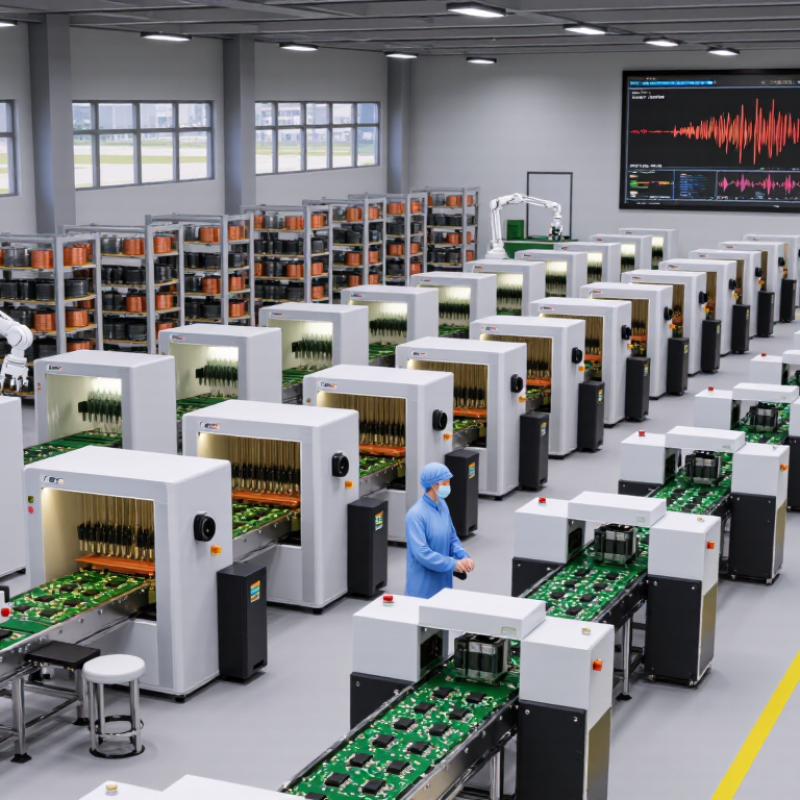
A top China PCB fabrication manufacturer is not defined by low pricing alone. It earns trust through repeatable processes, clear records, and honest technical communication. During supplier evaluations, engineers should inspect sample boards, not just polished presentations. Look for clean solder masks, precise drilling, and consistent copper thickness. Small details matter. A reliable factory can explain its layer stack, laminate selection, and impedance-control method. It should also identify design risks before production begins.
Strong process control separates capable fabricators from convenient vendors. Ask how the facility manages incoming materials, photoimaging, plating, etching, and final inspection. Useful evidence includes AOI results, electrical test records, cross-section reports, and lot traceability. Certification supports credibility, but certificates alone prove little. The real question is whether operators follow documented procedures every day. A serious manufacturer can discuss drill wear, registration limits, and how defects are corrected. That level of detail shows practical expertise.
Communication is equally important when schedules become tight. A top choice reports delays early and confirms changes in writing. It provides realistic lead times, responsive engineering support, and packaging suited to long-distance shipping. Yet no factory gets every detail right. I would examine how it handles a failed sample or an unexpected dimensional result. A defensive answer is a warning sign. An open corrective-action report is more useful than a perfect sales promise. Price still matters, but dependable quality reduces rework, line stoppages, and costly surprises.
| Evaluation Dimension | What a Top Manufacturer Demonstrates | Relevant Data or Industry Requirement | Why It Matters | Recommended Verification |
|---|---|---|---|---|
| Quality Management | Documented process control, corrective-action procedures, traceability, and regular internal audits. | ISO 9001 certified Quality records should cover materials, production, inspection, and shipment. |
Reduces process variation and provides a structured method for preventing recurring defects. | Request a current certificate, scope of certification, and sample quality records. |
| Automotive Capability | Controlled production systems suitable for safety-critical and high-reliability applications. | IATF 16949 certified Applicable when the supplier supports automotive supply chains. |
Demonstrates stronger risk management, traceability, and process-discipline expectations. | Confirm certificate validity and whether the relevant production site is covered. |
| Environmental Management | Procedures for chemical handling, waste reduction, emissions control, and environmental compliance. | ISO 14001 certified Environmental controls should apply to the actual manufacturing facility. |
Helps customers manage regulatory, supply-chain, and sustainability requirements. | Review the certificate scope, audit status, and environmental compliance documentation. |
| PCB Standards Compliance | Manufacturing and acceptance criteria aligned with recognized rigid, flexible, or high-density interconnect standards. | Common references include IPC-6012 for rigid printed boards and IPC-A-600 for board acceptability. | Creates consistent requirements for materials, construction, workmanship, and inspection. | Specify the applicable revision and acceptance class in the purchase documentation. |
| Electrical Testing | Automated or fixture-based testing for opens, shorts, insulation resistance, and net connectivity. | Electrical testing should be selected according to board complexity and production volume; flying-probe testing suits prototypes and small batches, while fixture testing suits repeat production. | Detects hidden connectivity defects that visual inspection cannot reliably identify. | Ask for test coverage, test reports, and procedures for handling failed boards. |
| Dimensional Control | Inspection of board outline, hole position, slot dimensions, layer registration, and surface finish thickness. | Measurements should be compared with the approved fabrication drawing and tolerance requirements. | Accurate dimensions are essential for assembly fit, connector alignment, and mechanical integration. | Review a first-article inspection report and measurement equipment calibration records. |
| Material Traceability | Lot-level identification for laminate, copper foil, solder mask, surface finish chemicals, and production batches. | Traceability should connect incoming material records with work orders and final inspection results. | Enables faster root-cause analysis, containment, and product recalls when necessary. | Request a sample traceability flow from raw material receipt to shipment. |
| Technology Range | Capability for multilayer, high-density, rigid-flex, flexible, heavy-copper, impedance-controlled, or metal-core boards as required. | Capability must be confirmed by actual design rules, such as layer count, minimum trace and space, via structure, and copper thickness. | A suitable technology range prevents redesigns and reduces the need to split a project among multiple suppliers. | Compare the supplier’s capability sheet with the project’s actual Gerber and drill files. |
| Impedance Control | Controlled dielectric construction, stack-up approval, coupon design, and impedance measurement. | Controlled-impedance designs should include target values, tolerance limits, reference layers, and test-coupon requirements. | Supports signal integrity in high-speed digital, radio-frequency, and communication applications. | Request the proposed stack-up, impedance calculation, and test report for the production lot. |
| Prototype Responsiveness | Fast engineering review, design-for-manufacturing feedback, and clear handling of engineering changes. | Prototype timing varies by layer count, material, surface finish, and testing; the quoted schedule should include engineering, fabrication, inspection, and shipping. | Shortens development cycles and identifies manufacturability problems before mass production. | Evaluate response time, engineering questions, and the completeness of the quotation. |
| Production Capacity | Dedicated lines, documented capacity planning, preventive maintenance, and contingency arrangements. | Capacity should be expressed by board type and production period rather than by a single total-area figure. | Helps maintain delivery consistency when order volumes increase or demand fluctuates. | Ask for monthly capacity by technology and the site’s backup-production plan. |
| Delivery Reliability | Stable planning procedures, order-status updates, material-risk alerts, and shipment documentation. | On-time delivery should be measured against the confirmed date and reported over a defined period. | Reliable delivery reduces assembly-line interruptions and inventory buffers. | Request anonymized on-time-delivery performance and escalation procedures. |
| Cost Transparency | Clear separation of tooling, engineering, fabrication, testing, surface finish, packaging, and logistics charges. | Quotes should state currency, quantity breaks, validity period, payment terms, and assumptions. | Transparent pricing makes supplier comparisons more accurate and limits unexpected charges. | Compare itemized quotations using the same specifications and delivery terms. |
| Customer and Technical Support | Accessible engineering contacts, multilingual communication where needed, and documented issue-resolution workflows. | Support quality can be assessed by response time, technical completeness, and corrective-action closure. | Fast technical communication is especially valuable during prototype changes and production deviations. | Use a technical pre-production discussion to assess communication and problem-solving ability. |
| Risk and Business Continuity | Controls for supply interruptions, equipment failure, cyber risks, natural events, and critical-material shortages. | A continuity plan should identify backup equipment, alternative materials, recovery priorities, and customer communication methods. | Protects long-term supply stability beyond the normal manufacturing process. | Review the supplier’s risk register, backup arrangements, and business-continuity procedures. |
Note: Certification requirements, technical limits, production capacity, lead times, and delivery performance vary by facility and project. All figures and claims should be confirmed against current site-specific documentation and the approved fabrication specification.