Top 10 Artificial Lift Technologies You Need to Know?
Artificial Lift Technologies play a vital role in the oil and gas industry. They help enhance production rates and extend the life of wells. As renowned expert Dr. Sarah Thompson states, "The right artificial lift system can transform underperforming wells." Understanding these technologies is crucial for producers.
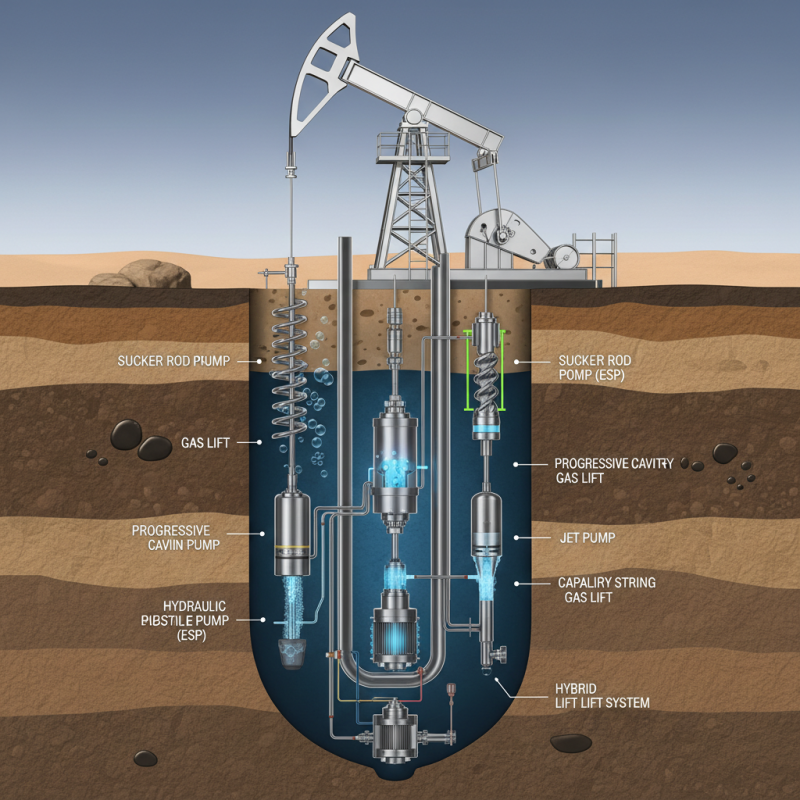
There are various types of artificial lift methods, each suited for different conditions. For example, sucker rod pumps are common in many oilfields. Gas lift systems, on the other hand, excel in deep wells. Each technology has its advantages and challenges.
The complexity of selecting the optimal system can't be overlooked. A wrong choice can lead to inefficiencies and increased costs. Observing the pitfalls in project deployments is essential. The understanding of Artificial Lift Technologies must evolve as the industry does.
Top 10 Artificial Lift Technologies You Need to Know
Artificial lift technologies are essential for enhancing oil and gas production. Understanding the top technologies can optimize efficiency and improve output. The global artificial lift market is expected to reach $31 billion by 2026, indicating growing significance in the industry.
One notable technology is rod lift systems. These systems are simple and effective. They can be used in various wells, especially those with moderate depth. However, they can lead to increased wear and tear. Another significant technology is gas lift. This method allows operators to reduce the hydrostatic pressure in wells. It can enhance production rates dramatically, yet it requires precise gas injection.
Progressive cavity pumps (PCP) also play a vital role. These pumps are suitable for viscous fluids and can operate effectively in challenging environments. Their installation may involve complex setups, which can deter efficiency. Despite advances, challenges remain in optimizing these technologies. Continuous innovation is required to address issues like energy consumption and maintenance costs.
Top 10 Artificial Lift Technologies You Need to Know
| Technology | Description | Applications | Advantages |
| Rod Pumping | A mechanical method that uses rods connected to a surface pump. | Oil extraction in onshore wells. | Reliable and cost-effective. |
| Electric Submersible Pump (ESP) | An assembly of a motor and pump submerged in the fluid. | Deep wells and high-flow applications. | High efficiency and production rates. |
| Gas Lift | Injects gas into the fluid column to reduce density. | Low-pressure wells. | Suitable for high viscosity fluids. |
| Progressing Cavity Pump | Uses a helical rotor to move fluid through a stator. | Viscous fluids and solids. | Handles varying flow conditions effectively. |
| Hydraulic Pumping | Uses hydraulic fluid to lift the oil to the surface. | Deep offshore applications. | Robust in challenging environments. |
| Screw Pump | Utilizes a rotating screw mechanism to lift fluid. | Heavy oils and mixtures. | Low shear and safe for sensitive fluids. |
| Plunger Lift | Mechanically cycles a plunger through the fluid column. | Low-pressure and gas-lift applications. | Low maintenance and cost-effective. |
| Submersible Motor Pumps | Submerged motor with a drilling fluid system. | Deep well extraction. | Great for high-pressure environments. |
| Thermal Recovery | Uses heat to lower the viscosity of heavy oils. | Heavy oil and tar sand reservoirs. | Enhances crude oil recovery significantly. |
Overview of Artificial Lift and Its Importance in Oil Production
Artificial lift technologies play a critical role in oil production. They help increase the flow of crude oil from wells, especially as reservoir pressures decline. According to a report by the International Energy Agency, about 80% of oil wells globally require some form of artificial lift. This significant percentage highlights its importance in maintaining production levels.
Various methods, such as gas lift, beam pumping, and electric submersible pumps, are employed. Each method has particular advantages and challenges. For instance, gas lift can be cost-effective, yet it may not perform well in wells with high liquid-to-gas ratios. On the other hand, electric submersible pumps are efficient but can incur high operational costs.
Current industry data suggests that optimizing these technologies is key to maximizing production efficiency.
Few operators have fully integrated advanced technologies like artificial intelligenceinto their Artificial Lift Systems. This integration could enhance decision-making but comes with hurdles. Maintenance issues and the complexity of AI models can complicate effectiveness. Operators must continuously evaluate these elements to ensure that their use of artificial lift remains productive in a competitive market.
Analyzing the Performance of Rod Pumping Systems in Oil Extraction
Rod pumping systems play a crucial role in oil extraction. They are widely used in mature oil fields where conventional methods are not viable. According to the World Energy Council, about 75% of the oil produced worldwide utilizes some form of artificial lift. This underscores their importance in maintaining production rates.
Despite their capabilities, rod pumps face challenges. Efficiency drops significantly with increasing viscosity and depth. A report by the Society of Petroleum Engineers noted that for every additional 1,000 feet, production can decline by approximately 20%. Operators struggle to find the optimal pump configuration. Many systems are over or under-sized, leading to wasted energy and increased wear. Data suggests that regular maintenance can improve performance by 15% to 20%.
Moreover, the rod pump's performance can vary due to environmental factors. Temperature changes affect fluid density, impacting lift efficiency. The industry often overlooks this, leading to inconsistent output. Adjusting to these variations remains a critical area needing attention and innovation. Regular analysis and adaptations are essential to optimize production.
The Role of Gas Lift Systems in Enhancing Oil Recovery Efficiency
Gas lift systems play a crucial role in enhancing oil recovery efficiency. By injecting gas into the well, these systems reduce the density of the fluid column. This allows for a more efficient lift of oil to the surface. Gas lift is particularly beneficial in situations where other methods may struggle. It can improve flow rates significantly, even in high-viscosity environments.
Tips: Monitor gas injection rates carefully. Too much gas can lead to inefficiencies. On the flip side, too little gas may not provide adequate lift. Adjustments must be made based on well conditions.
Using gas lift systems requires attention to detail. Operators need to assess reservoir characteristics. Not all wells are ideal candidates for this method. Sometimes, unexpected challenges arise during implementation. Recognizing potential pitfalls early can save resources and time.
Regular maintenance of gas lift equipment is essential. Neglect can result in reduced performance. Operators should conduct routine inspections. Ensure all components function correctly. This will maximize the efficiency of the gas lift system.
Electric Submersible Pumps: Key Advantages and Operational Data
Electric submersible pumps (ESPs) are essential in artificial lift technologies. They play a significant role in oil and gas production. Their design allows them to pump fluids from deep wells. This capability is crucial for maximizing well output.
One of the key advantages of ESPs is their efficiency. They can handle a wide range of fluid viscosities. This flexibility is beneficial in different fields and conditions. The operational data shows that these pumps can reduce production costs significantly. However, maintenance can be a challenge. The pumps must be monitored regularly to ensure optimal performance.
Despite their advantages, ESPs have some drawbacks. They require a steady power supply, which can be a limitation in remote locations. The installation process can also be complex. Proper training for technicians is necessary to avoid potential issues. Reflecting on these factors helps operators make informed decisions about using ESPs in their operations.
Conclusion
Artificial Lift Technologies play a critical role in optimizing oil extraction processes, significantly enhancing production efficiency. This article outlines the top ten artificial lift methods essential for industry professionals, beginning with an overview of their importance in oil production. Key technologies discussed include rod pumping systems, which are analyzed for their performance in oil extraction, and gas lift systems, which contribute to improved recovery rates.
Additionally, electric submersible pumps are highlighted for their operational advantages, while the comparison between progressive cavity pumps and other lifting technologies showcases the diversity in applications and effectiveness of these systems. Understanding the capabilities and operational data of these artificial lift technologies is vital for maximizing oil recovery and ensuring sustainability in extraction practices.