How to Choose the Right Electric Forklift Battery for Your Needs?
Choosing the right Electric Forklift Battery is crucial for operational efficiency and cost-effectiveness. The battery type impacts your forklift's performance, runtime, and maintenance requirements. A well-suited battery enhances productivity, while the wrong choice can lead to unexpected downtimes.
Several factors should guide your decision. Each operation has unique demands. Consider the environment, workload, and frequency of use. For instance, a warehouse requiring all-day operation needs a different battery compared to a facility with sporadic use. Understanding these needs is important. However, many overlook battery maintenance and lifecycle. An informed choice should account for both upfront costs and long-term reliability.
Innovation in battery technology provides options, but it can be overwhelming. Researching brands and seeking expert advice is essential. While personal experiences may vary, relying on credible sources enhances decision-making. Reflecting on your company's specific needs will lead to a better investment. Ultimately, the right Electric Forklift Battery can significantly impact your operation's success.
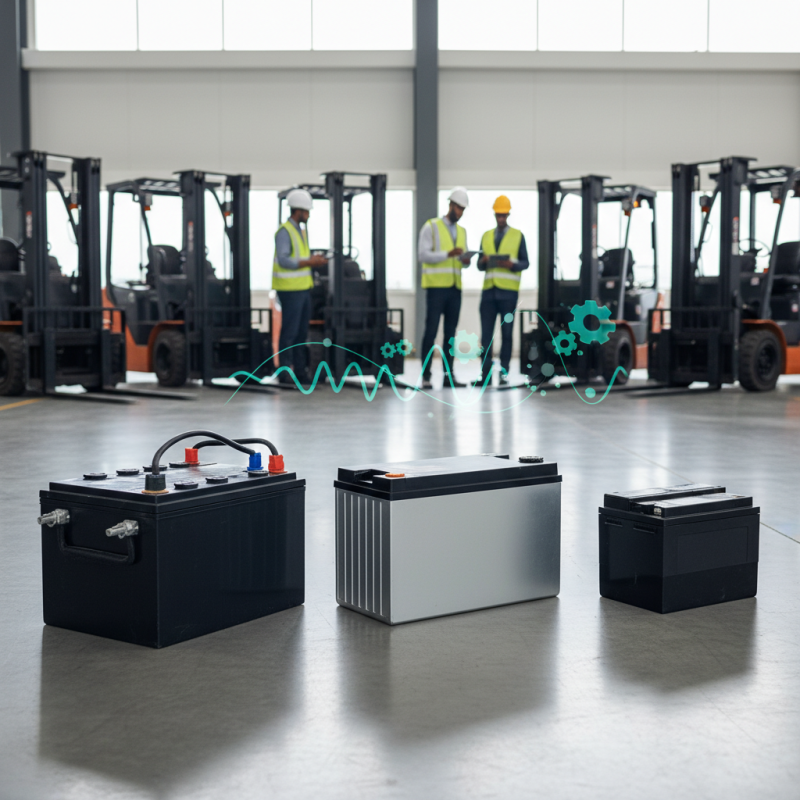
Understanding the Types of Electric Forklift Batteries Available
When selecting an electric forklift battery, understanding the available types is crucial. There are mainly three types: lead-acid, lithium-ion, and nickel-cadmium batteries. Each type has unique characteristics that can affect performance. Lead-acid batteries are the most common, known for their cost-effectiveness. However, they require more maintenance and have a shorter lifespan compared to other options.
Lithium-ion batteries stand out for their longevity and efficiency. They charge quickly and can operate in a wider temperature range. This can be ideal for businesses needing fast turnaround times. On the downside, their initial costs can be higher, potentially leading to budget considerations.
Nickel-cadmium batteries, while less commonly used today, offer reliable power. They are less sensitive to temperature variations and can withstand deep discharges. However, they may require specific handling due to environmental concerns. Businesses need to reflect on their specific operational needs when choosing a battery type. Looking at all factors will pave the way for better decision-making in your forklift operations.
How to Choose the Right Electric Forklift Battery for Your Needs?
| Battery Type | Voltage | Capacity (Ah) | Cycle Life | Weight (lbs) | Maintenance |
| Lead-Acid | 6V/12V | 150-800 | 500-1500 | 300-700 | High |
| Lithium-Ion | 24V/36V/48V | 100-600 | 2000-5000 | 200-600 | Low |
| Nickel-Cadmium | 24V/36V/48V | 150-800 | 1500-2000 | 300-800 | Moderate |
Evaluating Your Electric Forklift's Power Requirements
When choosing the right electric forklift battery, it's essential to evaluate your power requirements carefully. Start by understanding the energy needs of your forklift based on its typical use. Consider the duration of operation and the weight of loads. A deeper understanding will help you select the appropriate battery size and type.
Tips: Map out your daily tasks. Identify peak usage times for better estimation. Do not overlook seasonal fluctuations in power demand. These factors can influence battery performance over time.
Also, assess how often you plan to recharge the battery. If your operations are continuous, a larger capacity battery may be necessary. Yet, a larger battery can add weight, impacting maneuverability. Finding the right balance is crucial.
Tips: Research the average lifespan of different battery types. Understand charging times and maintenance requirements. This will help maximize efficiency and reliability. Remember, the wrong choice can lead to unexpected downtime and operational inefficiencies.
Considering Battery Life and Maintenance Needs
When selecting the right electric forklift battery, understanding battery life and maintenance is crucial. Research shows that lead-acid batteries typically last 1,500 cycles, while lithium-ion batteries can exceed 3,000 cycles. This difference can significantly impact long-term costs. A company should consider how often the forklift will be used. For intense operations, a longer-lasting battery offers better value.
Maintenance is another critical factor. Lead-acid batteries require regular watering and cleaning, which can be time-consuming. Neglecting maintenance can reduce battery life by up to 30%. In contrast, lithium-ion batteries require minimal upkeep, appealing for busy work environments. However, their initial cost can be higher. It’s essential to weigh maintenance ease against upfront expenses.
Choosing a battery also involves understanding your specific operational needs. Companies often underestimate how this decision can influence productivity. Batteries with shorter runtimes may lead to more downtime for charging and swapping. A comprehensive study by industry experts indicates that optimizing battery selection can enhance overall efficiency by 15%. Organizations must reflect on their unique requirements to make an informed choice.
Assessing Charging Infrastructure and Compatibility
When assessing electric forklift batteries, focusing on charging infrastructure is crucial. The compatibility of the battery with existing charging systems can significantly impact operational efficiency. Research from the Electric Power Research Institute indicates that a mismatched battery and charger can reduce performance by up to 20%. Businesses need to evaluate their current charging capabilities before making a battery choice.
Batteries come in various chemistries, such as lead-acid and lithium-ion. Lead-acid batteries generally require longer charging times, up to eight hours. In contrast, lithium-ion batteries can fully charge in about one to two hours, offering more flexibility. However, the initial investment in lithium-ion technology is higher. Companies must weigh these benefits against their operational needs and current infrastructure.
Moreover, installing new charging stations may require significant planning and investment. According to a report by Allied Market Research, companies that optimize their charging systems can expect an increase in productivity by 15% or more. Evaluating grid compatibility and electrical capacity is essential in this process. Improper planning here can lead to unforeseen costs and downtime. Balancing all these factors can pose a real challenge for decision-makers in the logistics and warehousing sectors.
Budgeting for Electric Forklift Battery Options and Upkeep
Choosing the right battery for your electric forklift directly impacts your operational costs. Initially, it's essential to evaluate your budget for both the purchase and maintenance of the battery. Electric forklift batteries can range significantly in price. It's not just about upfront costs; consider future maintenance and lifecycle expenses too.
Keep in mind that a high-quality battery may have a higher initial price but can lower long-term costs. Think about the total cost of ownership. Sometimes, opting for cheaper batteries leads to frequent replacements and repairs. It's a financial pitfall that can disrupt your budget.
Don’t overlook the importance of ongoing upkeep. Regular maintenance can prevent unforeseen expenses and extend battery life. However, this often requires experience or expert assistance. Assess if your team has the necessary knowledge or if outside help is needed. This decision involves weighing costs against potential risks. Balancing these aspects is essential for effective budgeting in your electric forklift operations.
Electric Forklift Battery Options and Maintenance Costs
This chart illustrates the average cost of different types of electric forklift batteries. Understanding these costs can help you choose the right battery that fits your budget and maintenance needs.
