How to Choose the Best Smart Potentiometer for Your Needs?
In the world of electronics, the Smart Potentiometer is gaining significant attention. Market research indicates a growing demand for this technology, which is expected to reach over $2 billion by 2025. These devices offer precision control in various applications, from audio systems to industrial automation.
When selecting a Smart Potentiometer, it’s crucial to consider your specific needs. Not all potentiometers will perform equally well in every situation. Factors such as resistance range, power rating, and response time can greatly affect performance. A poorly chosen potentiometer can lead to inefficiencies or malfunctions, impacting overall system functionality.
Furthermore, industry experts emphasize the importance of reliability. According to a recent industry report, nearly 30% of electronic failures stem from inadequate component selection. Thus, a careful evaluation of your requirements is essential. Investing in a Smart Potentiometer that fits your application can enhance system performance and longevity.
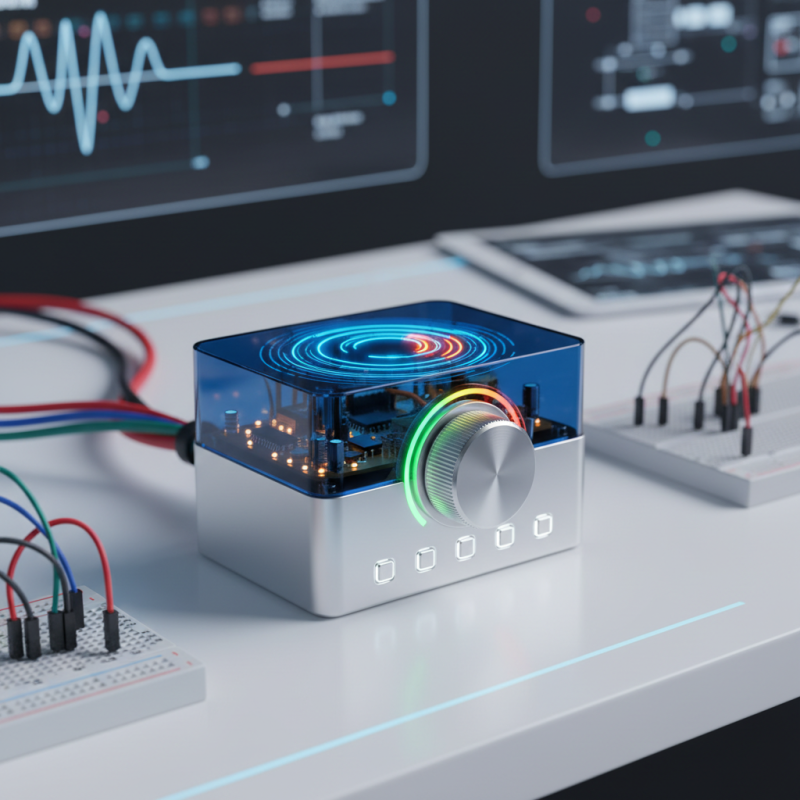
Understanding Smart Potentiometers: Definition and Types
Smart potentiometers are essential in various electronic applications. They adjust resistance in circuits, taking inputs from microcontrollers or sensors. Understanding their types helps in choosing the right one for your needs.
There are two main types: digital and analog smart potentiometers. Digital potentiometers use a digital input to adjust resistance and require less power. In contrast, analog potentiometers manually change resistance levels. According to a report by ResearchAndMarkets, the global smart potentiometer market is expected to grow at a CAGR of 8.5% from 2022 to 2026. This growth highlights the increasing demand in automotive, industrial, and consumer electronics.
When selecting a smart potentiometer, pay attention to specifications like voltage rating and resistance range. Consider where you will use it. For dense circuit boards, space-saving options are crucial. Compliance with industry standards ensures safety and reliability. Testing various models may be necessary to find the best fit for your projects.
Tips: Always consult datasheets for accurate technical details. This can prevent compatibility issues later. Plan for future upgrades, as technology rapidly evolves. Choosing the right potentiometer can significantly influence project efficiency and performance.
Key Features to Consider When Choosing a Smart Potentiometer
When selecting a smart potentiometer, key features play a crucial role in meeting your needs. One important feature is precision. This affects how accurately the device performs its function. Look for products that specify their tolerance levels. Low tolerance values mean higher accuracy in applications where precision is essential.
Another critical aspect is the connectivity options. Many smart potentiometers offer various interfaces like I2C, SPI, or UART. These choices can limit or expand your integration possibilities. Consider your existing systems and choose a model that fits seamlessly. Be aware that some models may have compatibility issues with certain platforms.
Power consumption is also worth examining. Devices that consume less power are beneficial, particularly for battery-operated applications. However, some may trade off performance for efficiency, which might not suit high-demand environments. Make sure to assess your specific requirements to find the right balance between performance and energy use.
Factors Influencing Smart Potentiometer Performance and Compatibility
When selecting a smart potentiometer, various factors significantly influence its performance and compatibility. The first crucial aspect is the resistance range. Different applications require different resistance values. Ensure that the potentiometer you choose meets your specific application needs. Moreover, the precision of the potentiometer plays a vital role. Higher precision devices provide more accurate adjustments, which is essential for sensitive applications.
Tips: Always look for data sheets detailing the specifications. This information helps in making informed decisions. Compatibility with existing circuits is another crucial factor. A device that does not fit well may lead to poor performance. This compatibility includes voltage ratings and physical dimensions. Take time to assess how the potentiometer will integrate into your overall system.
Additionally, consider the technology used in the smart potentiometer. Digital versions often offer more features like programmability. However, they can be more complex to implement. Simpler analog models might be easier but could lack advanced functionalities. This balance between complexity and usability can be challenging to navigate. Make sure to reflect on your skills and the requirements of your project.
Applications of Smart Potentiometers in Various Industries
Smart potentiometers have found their place in various industries due to their versatility and precision. In automation and robotics, these devices enable fine control over motor speeds and movements. By allowing for real-time adjustments, smart potentiometers improve the efficiency of automated systems. They help achieve smoother operations and can significantly reduce maintenance costs.
In the audio and entertainment industries, smart potentiometers control volume levels and equalization settings. Their ability to make precise adjustments in response to user input enhances the overall user experience. Musicians and sound engineers appreciate the responsiveness and reliability that these devices offer during live performances and studio recordings.
However, the selection of the right smart potentiometer often poses challenges. Users may struggle with technical specifications, leading to incorrect choices. This can result in poor performance or compatibility issues. Therefore, it is crucial to assess specific needs carefully. Understanding the current and voltage requirements can prevent potential problems. Careful consideration will lead to selecting a smart potentiometer that truly meets unique requirements for optimal performance.
How to Choose the Best Smart Potentiometer for Your Needs? - Applications of Smart Potentiometers in Various Industries
| Industry | Application | Key Features | Recommended Specifications |
| Automotive | Electronic Control Systems | High precision, durable under temperature fluctuations | Resistance range: 1kΩ to 100kΩ, Temperature range: -40°C to +125°C |
| Consumer Electronics | Volume Control | Compact, responsive, low power consumption | Resistance range: 10kΩ, Power rating: 0.1W |
| Industrial Automation | Position Feedback | Highly durable, wide temperature range | Resistance range: 1kΩ to 500kΩ, Life cycle: 10 million cycles |
| Telecommunications | Signal Attenuation | Compact size, stable performance | Resistance range: 10Ω to 50kΩ, Adjustable range: 0-100% |
| Healthcare | Medical Devices Calibration | High stability, low noise | Resistance range: 1kΩ to 10MΩ, Noise level: < 0.1 mV |
Comparative Analysis of Leading Smart Potentiometer Brands and Models
When selecting a smart potentiometer, understanding the comparative features is crucial. Industry reports indicate that the market has several leading brands, each with unique specifications. Many models boast a resolution of up to 16 bits, enhancing precision in various applications. For instance, a well-regarded model may offer advanced temperature compensation, ensuring performance stability.
Compatibility is another key factor. Some models integrate seamlessly with different microcontrollers and automation systems. According to recent surveys, over 70% of users prefer potentiometers that support various communication protocols, such as I2C and SPI. This versatility allows for easier implementation in diverse projects.
Tips: Always consider the intended use of the potentiometer. For high-performance tasks, prioritize models with greater accuracy. Check user reviews and technical data before making a purchase. A well-documented model is often more reliable. Lastly, remember that price does not always equate to quality. Evaluate the specific features that meet your project requirements to avoid overspending on unnecessary functionalities.
