China Top 10 Flexible Circuit Board Manufacturers
China’s flexible electronics sector has moved from low-cost production toward demanding, high-value applications. Today, a Flexible Circuit Board may connect a smartphone camera, medical sensor, automobile display, or aerospace control module. Its thin copper traces bend inside spaces that rigid boards cannot reach.
Joe Fjelstad, a recognized flexible-electronics expert and author of Flexible Circuit Technology, has stated, “The future of electronics is flexible.” This brief observation captures the industry’s direction. Yet flexibility alone does not guarantee quality. Engineers must examine layer design, copper treatment, bend radius, adhesive selection, impedance control, and long-term reliability.
This article presents China’s top 10 Flexible Circuit Board manufacturers for buyers, engineers, and sourcing teams. The selection considers manufacturing scale, technical capability, certifications, product range, delivery performance, and experience with demanding industries. Several companies specialize in rigid-flex boards, while others focus on single-sided, double-sided, multilayer, or ultra-thin circuits.
The ranking is useful, but it is not absolute. Supplier performance can change with equipment upgrades, management decisions, and project complexity. A factory with impressive capacity may still struggle with small prototypes or unusual material specifications. That matters.
Readers should verify current certifications, audit production sites, review sample quality, and confirm traceability before placing orders. Real-world details often reveal more than a polished website. A clean etching line, stable dimensional control, and careful final inspection can determine whether a circuit survives repeated bending. This guide offers a practical starting point, not a substitute for technical due diligence.
What Are Flexible Circuit Boards and How Do They Work?
Flexible circuit boards are thin electrical assemblies that replace rigid wiring with bendable copper traces. A typical board uses a polyimide film, copper conductors, and a protective coverlay. Stiffeners may reinforce connector areas. This structure saves space inside cameras, medical instruments, vehicles, and compact consumer devices.
The circuit works like a rigid printed board, but its substrate can fold around tight spaces. Copper traces carry power and signals between components or connectors. Engineers define a minimum bend radius before production. A static bend may occur during assembly, while a dynamic bend repeats during operation. Repeated folding can fatigue copper, especially near sharp corners or plated holes. It still fails sometimes.
In practical design reviews, I check trace spacing, conductor width, heat buildup, and connector strain. High-speed signals also need controlled impedance and a stable reference layer. A thin board feels flexible, yet copper density can make one section surprisingly stiff. Testing should include repeated-bend cycles, temperature changes, and visual inspection under magnification. These tests reveal cracks, lifted coverlay, and weak solder joints before field use. Design rules help, but they are not absolute. Manufacturing variation, handling pressure, and an overly small bend radius can still change the result.
Flexible Circuit Boards: Nominal Copper Thickness by Copper Weight
Flexible circuit boards use thin copper conductors laminated onto flexible dielectric films. Copper weight is commonly expressed in ounces per square foot; the values below show the corresponding nominal copper thickness.
How it works: A flexible circuit is built by bonding patterned copper foil to a flexible insulating film, often polyimide. The copper carries electrical signals, while the flexible substrate allows the circuit to bend, fold, or fit into compact assemblies.
China’s Flexible Circuit Board Manufacturing Industry
China Top 10 Flexible Circuit Board Manufacturers
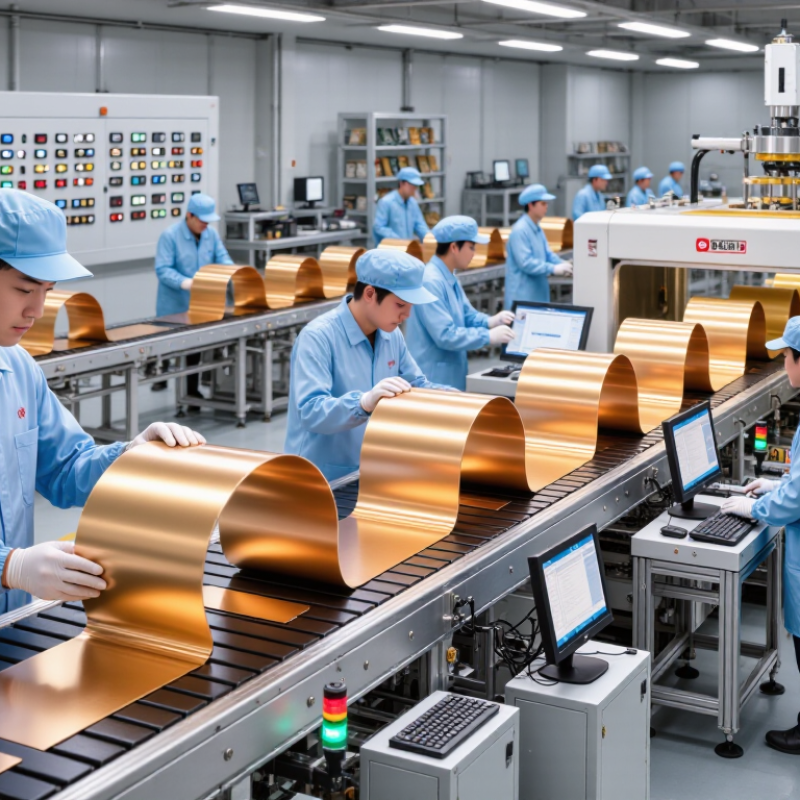
China’s flexible circuit board manufacturing industry has developed around dense supply networks, skilled engineers, and scalable production. Manufacturers commonly process polyimide films, rolled copper foil, coverlay materials, and stiffeners in controlled facilities. These components support compact products, including cameras, medical instruments, vehicles, and wearable electronics.
Production often combines laser drilling, photolithography, etching, plating, and automated optical inspection. Roll-to-roll lines can improve output for stable designs, while batch processing suits customized orders. In practice, material selection matters greatly. A thin circuit may bend easily, yet repeated folding can expose weaknesses in copper adhesion or solder joints. Small errors become expensive.
Quality management requires more than a polished factory visit. Buyers should review traceability records, cross-section samples, impedance data, and test reports from current production lots. Reliable suppliers also explain their capability limits, including minimum line width, bend radius, layer count, and delivery variation. Compliance with recognized quality and environmental standards strengthens confidence, but certificates cannot replace process evidence.
The industry still faces pressure. Raw material prices fluctuate, skilled labor is unevenly distributed, and complex designs may reduce yield. Some production schedules look impressive on paper. They may fail during engineering changes. A careful manufacturer records failure patterns, adjusts tooling, and communicates problems early. That habit is not perfect, but it is more valuable than promising flawless performance.
Criteria for Selecting China’s Top 10 FPCB Manufacturers
China Top 10 Flexible Circuit Board Manufacturers
Selecting China’s top ten FPCB manufacturers requires evidence, not advertising claims. Prismark’s 2024 industry outlook estimated the global PCB market at approximately US$73 billion. Flexible and rigid-flex products remain important growth areas. However, market size alone cannot prove manufacturing quality. Buyers should examine audited production records, monthly capacity, defect rates, and delivery performance.
Process capability deserves close attention. Confirm whether the factory follows IPC-6013 requirements for flexible printed boards. Review copper thickness, minimum trace spacing, layer alignment, bend-radius testing, and impedance control. A capable supplier should provide microsection images, AOI records, electrical-test results, and full material traceability. Ask for recent yield data, not only a polished sample. Small details matter, such as exposed copper near a connector or uneven coverlay edges.
Reliability testing should match the product’s real movement and temperature conditions. IPC-TM-650 methods can support thermal cycling, solderability, flex endurance, and insulation testing. The 2024 IPC industry survey also highlighted continuing supply-chain and labor pressures, so contingency planning matters. Check whether key materials have qualified alternatives and whether engineering support operates across time zones. A top-ten list should reward stable systems, not just low quotations. Price comparisons can mislead. I would also inspect one production shift personally, because factory presentations sometimes hide ordinary weaknesses. That limitation deserves reflection.
Profiles of China’s Top 10 Flexible Circuit Board Manufacturers
China’s top 10 flexible circuit board manufacturers represent varied strengths, not identical production models. Their profiles commonly include single-sided, double-sided, and multilayer flexible circuits. Some focus on medical instruments, while others serve automotive controls, displays, sensors, or compact consumer devices. Their facilities may include automated optical inspection, laser drilling, and controlled clean-room areas. These details matter when reliability cannot be judged from price alone.
A strong profile should examine material selection, copper thickness, bend-cycle testing, and dimensional control. It should also review engineering support, prototype speed, traceability, and quality certifications. Experienced manufacturers usually provide test reports, sample records, and clear tolerance data. However, public information is sometimes incomplete. A polished website is not proof of stable production. Factory audits and sample evaluations remain necessary. Small gaps in documentation deserve attention, not excuses.
Tips: Ask each supplier for a cross-section, inspection plan, and recent reliability results. Confirm whether the quoted design matches your actual bend radius and assembly process. Compare response quality, not only unit cost. A cheaper board can create expensive rework.